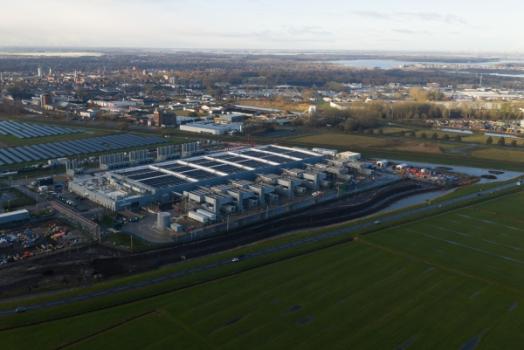
Developers are increasingly turning to water reuse, recycling and infrastructure partnership strategies to secure more reliable and sustainable water supplies for large-scale computing infrastructure.
As demand for data centers continues to accelerate, water availability is emerging as a critical factor in project development and long-term operations. Although power supply and transmission access have historically dominated siting discussions, increasing water constraints in many regions are placing greater focus on the substantial volumes of water required to support data center cooling systems. As we covered previously, data centers are frequently located in areas already experiencing water stress and require substantial volumes of water to operate—roughly 228 billion gallons in 2023 in the United States alone—with water use projected to increase by up to 170% by 2030.
Alternative cooling options, such as free-air cooling or mechanical chillers, can reduce direct water consumption but introduce their own tradeoffs. Free-air cooling is climate-dependent and often ineffective in hotter regions, while mechanical chillers increase energy demand, potentially shifting water consumption upstream through increased electricity generation.
Reprinted courtesy of Ashleigh Myers, Pillsbury, Jillian Marullo, Pillsbury and Jason Drogin Atwood, Pillsbury
Ms. Myers may be contacted at ashleigh.myers@pillsburylaw.com
Ms. Marullo may be contacted at jillian.marullo@pillsburylaw.com
Mr. Atwood may be contacted at jason.atwood@pillsburylaw.com