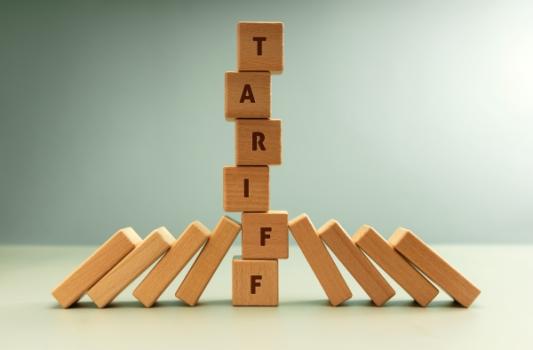
Although recent litigation has centered on the scope of presidential tariff authority rather than construction‑specific disputes, these decisions carry important implications for how parties structure risk in their contracts.
Volatile U.S. tariff announcements continue to affect international supply chains for U.S. construction projects. Although recent litigation has centered on the scope of presidential tariff authority rather than construction‑specific disputes, these decisions carry important implications for how parties structure risk in their contracts. In May 2025, the U.S. Court of International Trade (CIT) struck down certain “Liberation Day” tariffs as exceeding presidential authority under IEEPA. A federal district court in Washington, D.C. likewise issued a preliminary injunction suspending related tariffs—though it later stayed its own order pending appeal. And the Supreme Court has agreed to review cases addressing the legal limits of IEEPA‑based tariffs.
While none of these developments arises from construction disputes, the themes they highlight—timing, statutory authority, and documentation—mirror the issues encountered when tariff conditions disrupt international procurement. The following strategies reflect practical steps U.S. project owners, contractors, and foreign suppliers can take to mitigate risk, drawing on drafting approaches now widely used across major construction forms, including—but not limited to—modified AIA agreements.
Reprinted courtesy of Sara Beiro Farabow, Seyfarth Shaw LLP and Michael Wagner, Seyfarth Shaw LLP
Ms. Farabow may be contacted at sfarabow@seyfarth.com
Mr. Wagner may be contacted at mewagner@seyfarth.com