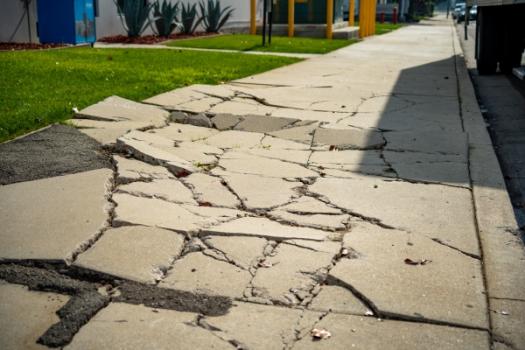
Author Michael Pollack explores the “tangled web of state and local regulation” that governs sidewalks, with cities often passing along responsibilities for tasks like clearing snow and keeping walkways safe.
In 2007, New York City’s sanitation department threatened Natalie Shea with a $300 fine for defacing public property with graffiti. Her crime: drawing a blue flower in front of her family’s Park Slope home with sidewalk chalk. She was six years old.
The incident, which made local and national news at the time, captures the fraught role that sidewalks often play in US cities. These patches of pavement do more than carry pedestrians to their destinations: They’re also places for commerce, social interaction and childhood play, from chalking to learning how to ride a bike. Urbanist Jane Jacobs once likened the range of activities that city sidewalks attract to an “intricate ballet.”
In the new book Sidewalk Nation: The Life and Law of America’s Most Overlooked Resource (Harvard University Press), author Michael Pollack explores the “tangled web of state and local regulation” that governs sidewalks, with cities often passing along responsibilities for tasks like clearing snow and keeping walkways safe. He paints a portrait of the American sidewalk a disorderly and often neglected network, filled with literal and metaphorical cracks that give rise to all sorts of conflict, from mundane clashes over maintenance to more consequential fights over accessibility and inequality.